






| CORROSION |
| CORROSION |
| SLEEVING |
| REMOTE FIELD |
| REMOTE FIELD |
| SLEEVING |

| TANK FLOOR |
| ACFM |
| PIPING |
| TANK FLOOR |
| ACFM |
| PIPING |

Chillers
| Magnetec Inspection, Inc. |
| Magnetec Inspection, Inc. |

| ECT |
| ECT |

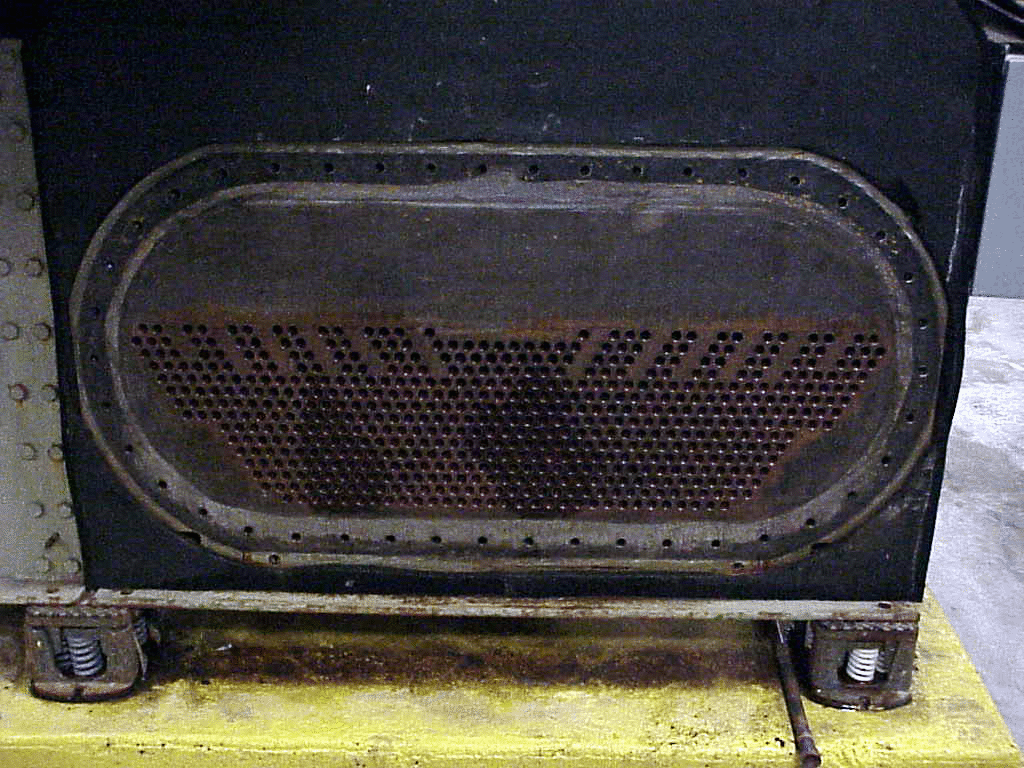
| CENTRIFUGAL, SCREW & RECIPROCATING COMPRESSOR TYPE CHILLERS |
Magnetec Inspection, Inc. offers specialized field
technicians for centrifugal, screw, and reciprocating
compressor type chillers. Knowledge has accumulated
over years of experience to support our technicians in
analysis of your chiller’s condition. The Eddy Current
method is used on non-magnetic materials. It can evaluate
conditions such as surface and subsurface discontinuities,
alloy composition, hardness, and thickness. Eddy Current
inspection addresses chiller and condenser tube damage
by means of the Eddy Current Testing (ECT).
technicians for centrifugal, screw, and reciprocating
compressor type chillers. Knowledge has accumulated
over years of experience to support our technicians in
analysis of your chiller’s condition. The Eddy Current
method is used on non-magnetic materials. It can evaluate
conditions such as surface and subsurface discontinuities,
alloy composition, hardness, and thickness. Eddy Current
inspection addresses chiller and condenser tube damage
by means of the Eddy Current Testing (ECT).
A tailor-made inspection solution to suit your chiller tubes,
“ECT” is an electromagnetic, non-destructive diagnostic
process that detects corrosion, erosion, breakage and
leakage in the chiller heat exchanger tubes, even those not
visible to the human eye. Performing ECT on chiller tubes
every few years helps locate defects at an early stage, well
before they bring an entire system down.
“ECT” is an electromagnetic, non-destructive diagnostic
process that detects corrosion, erosion, breakage and
leakage in the chiller heat exchanger tubes, even those not
visible to the human eye. Performing ECT on chiller tubes
every few years helps locate defects at an early stage, well
before they bring an entire system down.
| Two Chiller Types in Detail (SEE BELOW) |

| Centrifugal Chillers: |
| Absorption Chillers: |
For medium-sized to large facilities, centrifugal chillers are a popular choice. They offer high
operating efficiency and low maintenance requirements in a relatively compact design. But while
centrifugal chiller PM requirements might be low, their maintenance is critical. Ignoring ECT tube
inspection may drastically reduce performance and efficiency, while contributing to frequent
breakdowns and early failure.
The most serious maintenance problems facing centrifugal chillers are fouling, corrosion and air
leaks. Fouling occurs when solids in the chilled and condenser water drop out of suspension and
attach themselves to heat transfer surfaces within the chiller. Even a thin layer of solids can
dramatically reduce a chiller’s operating efficiency.
Corrosion, an electrochemical process that taking place within a chiller attacks metal surfaces,
decreases the efficiency of heat-transfer surfaces and can lead to the destruction of individual
tubes. The rate of corrosion is determined in part by the quantity of dissolved oxygen in the
water, the degree of alkalinity or acidity of the circulating water, and the concentration of
dissolved solids in the water.
Since many centrifugal chillers are low-pressure units, a leak in the system can allow air and
moisture to enter and mix with the refrigerant. Both of these substances reduce the chiller’s
capacity and operating efficiency. Moisture also mixes with refrigerant to form an acid that
attacks internal components.
Corrosion is best controlled through a water-treatment program that monitors conditions within
the chilled and condenser water systems and adds in the proper amount of chemicals.
operating efficiency and low maintenance requirements in a relatively compact design. But while
centrifugal chiller PM requirements might be low, their maintenance is critical. Ignoring ECT tube
inspection may drastically reduce performance and efficiency, while contributing to frequent
breakdowns and early failure.
The most serious maintenance problems facing centrifugal chillers are fouling, corrosion and air
leaks. Fouling occurs when solids in the chilled and condenser water drop out of suspension and
attach themselves to heat transfer surfaces within the chiller. Even a thin layer of solids can
dramatically reduce a chiller’s operating efficiency.
Corrosion, an electrochemical process that taking place within a chiller attacks metal surfaces,
decreases the efficiency of heat-transfer surfaces and can lead to the destruction of individual
tubes. The rate of corrosion is determined in part by the quantity of dissolved oxygen in the
water, the degree of alkalinity or acidity of the circulating water, and the concentration of
dissolved solids in the water.
Since many centrifugal chillers are low-pressure units, a leak in the system can allow air and
moisture to enter and mix with the refrigerant. Both of these substances reduce the chiller’s
capacity and operating efficiency. Moisture also mixes with refrigerant to form an acid that
attacks internal components.
Corrosion is best controlled through a water-treatment program that monitors conditions within
the chilled and condenser water systems and adds in the proper amount of chemicals.
While centrifugal chillers have been the industry standard for years, absorption units are gaining
ground. The cost of electricity, particularly for those who pay high demand charges or peak
rates, has led many facilities to consider chillers driven by alternative fuels. With its ability to use
steam or natural gas, the absorption chiller gives users that flexibility.
Proper PM of absorption chillers is critical for their efficient operation. Like centrifugal units,
absorption chillers require a comprehensive inspection of the tubes to monitor for active
corrosion and/or fouling…
Depending on chiller run time, managers should add a comprehensive ECT inspection of the
chiller tubing.
ground. The cost of electricity, particularly for those who pay high demand charges or peak
rates, has led many facilities to consider chillers driven by alternative fuels. With its ability to use
steam or natural gas, the absorption chiller gives users that flexibility.
Proper PM of absorption chillers is critical for their efficient operation. Like centrifugal units,
absorption chillers require a comprehensive inspection of the tubes to monitor for active
corrosion and/or fouling…
Depending on chiller run time, managers should add a comprehensive ECT inspection of the
chiller tubing.
| CONCENTRIFUGAL |


| CHILLERS |
| CHILLERS |


| Meeting Our Customers' Needs |




| based CHILLERS |
